Five Questions Before You Hit Send: Scoring Your Story the Way a Newsroom Does
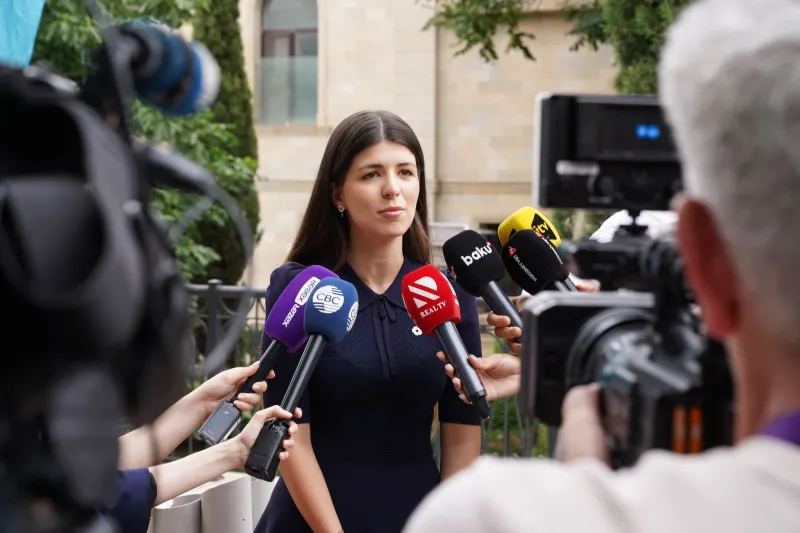
There is a moment in every newsroom that PRs never get to see. A pitch lands. The reporter reads it. Then they swivel round and say to whoever's nearest: "Have you seen this?"
If the desk leans in, you're in business. If the answer is a shrug, your email is going in the bin — politely, but in the bin.
That's the whole test. The Rave Review Test is just a way of asking that question before you hit send, rather than afterwards, when the only person who knows the answer is someone who will never tell you.
Why "newsworthy" is a useless word
Every newsworthiness checklist ever written says the same six things: timeliness, proximity, impact, prominence, novelty, human interest. All true. All useless, because none of them tell you whether a specific story, on a specific Tuesday, will make a specific journalist lean over to their colleague.
So stop asking whether your story is newsworthy. Start asking whether a journalist would recommend it. That's a different question, and it's answerable.
The five questions
Score each one out of five. Twenty-five is the ceiling. You'll rarely need the full range — most pitches sort themselves into obvious highs and obvious lows within about four minutes of honest conversation.
1. Novelty: is this new to the reader, or just new to you?
Most SMEs fail here because the company is new to the story, not the story new to the world. A first office in Leeds is a milestone for you and a Tuesday for everyone else.
The test: if a competitor announced the same thing tomorrow, would it still be interesting? If the honest answer is no, what you have is an announcement. Announcements belong on your website, not in a journalist's inbox.
2. Stakes: who loses if nothing changes?
Journalists are professional relevance detectors. A story needs something at risk — money, safety, jobs, trust, time. "We're excited to launch" has no stakes. "This piece of admin costs small builders four grand a year and nobody's fixed it" has stakes coming out of its ears.
If you can't name a person or a group who is worse off right now, you don't have a story yet. You have a product.
3. Proof: can a sceptical person check it?
Numbers with a methodology. A named case study who will actually pick up the phone. A document someone could FOI. Proof is what separates a claim from a story, and it's the criterion most pitching teams skim over.
A customer quote saying "great service" is a testimonial. It is not proof, and pretending otherwise is how you end up on a journalist's mental list of people who waste their time.
4. Timing: why this week specifically?
"Because we've got budget to spend this quarter" is not timing. A news desk runs on a calendar that already exists: the start of the tax year, Ofgem's price cap announcements, exam results day, the autumn Budget, party conference season, the first day of the school term, the transfer window closing.
Hook onto something already in the diary and you borrow its urgency for free. Miss the window and you'll be pitching a story that was interesting nine days ago, which is the same as pitching nothing.
5. Human angle: is there a person in it?
Not a logo. Not a founder's headshot. A person with a problem, a decision or a consequence hanging over them.
Regional and trade titles in particular will take the human version of a story over the abstract version almost every time, because their readers are people rather than market segments. If your pitch can't be told through a named individual, it probably can't be told.
Reading the total
Under 15. Don't send it. Not to anyone. Not even the local paper, which will take a lot but not everything.
15 to 19. There's a story in here, but it's a trade or regional story, or an op-ed, or a case study for your own channels. Adjust the target, not the effort.
20 and above. Send it, and send it to a short list rather than a long one, so you've got somewhere to go next time.
The precision isn't the point. The argument is. If two people in the room disagree by three points on proof, that disagreement is the most useful thing that will happen all week.
The bit everyone skips: the kill meeting
Half an hour, once a month. List everything you were planning to pitch. Score it as a group. Kill the bottom third without relitigating.
The instinct is to treat a killed story as wasted work. It isn't. Wasted work is the media list you burned on a 12 out of 25, and the journalist who now opens your emails with a slight sigh.
Don't bin the weak ones — route them
A low score isn't always a dead end. It's often a signal that you've got the wrong format:
- High novelty, low proof: this is a research project. Go and get the data.
- High stakes, low timing: hold it until the hook arrives and then move fast.
- High human angle, low novelty: that's a case study for the website and a LinkedIn post, not a press release.
- High proof, low stakes: that's an op-ed for a trade title, arguing your case to people who already care about the detail.
Where most teams go wrong is treating a mediocre score as a licence to release the same thing louder. Pushing harder on a weak story just means more people find out it was weak.
The question underneath the question
Journalists don't recommend stories to colleagues because they like you. They do it because forwarding your pitch makes them look sharp, connected and ahead of the curve.
So design for that. Ask whether your email makes the reporter look good to the person sitting next to them. If it makes them look like they've fallen for a press release, no score out of twenty-five will rescue it.
Five minutes with a pen and a colleague is cheaper than a quarter of pitching into the void. The review you're really after isn't the one in the paper. It's the one happening at the next desk over.